
WHS Software for Professional Services: Because Low Risk Isn't No Risk
SafeAlign scores your firm against the WHS Act and ISO 45001 across 10 elements, so whoever looks after WHS alongside their day job can see exactly where the firm stands.
- Built by a team with 25+ years of hands-on Australian WHS consulting
- Written in plain English for firms without a safety manager
- We set the system up; your people answer guided questions on their phones
Do professional services firms need to meet the WHS Act?
Yes. Work health and safety laws apply to every Australian business with workers, whether they’re on a scaffold or at a standing desk. SafeAlign’s WHS compliance software shows your firm where it stands against those duties: your team answers guided questions, and you see the result across 10 elements as green, amber or red.
In most firms, WHS belongs to whoever runs the office, HR or operations, on top of everything else. The office feels safe, so the system gets light attention, with an old policy, a first aid kit and an evacuation map by the lift. The risks that do show up in professional work, like workload, deadlines, isolation and conduct, rarely get measured, and when nobody raises them there’s a hidden cost to safety silence.
You advise clients on their risk every day. SafeAlign gives you the same clear view of your own. Know where you stand, then fix what matters first.

Why Professional Services Firms Use SafeAlign
-
No safety department required.
SafeAlign is built for firms where WHS is one responsibility among many. Guided questions, a score at the end, and a clear list of what to do next. -
A view the partners can read.
Traffic lights across 10 elements give partners or the board the firm's position on a single screen, with no safety jargon to learn first. It fits the kind of leadership routine set out in our MICE Framework. -
Duties that leave the building.
Your people work from home, at client premises and on the road. SafeAlign assesses your safety system as a whole, not just the floor plan of your office. -
Evidence for tenders and client questionnaires.
Government and corporate clients often ask about your WHS system before they sign. Your scores, reviews and fixes sit in one place, ready to draw on.
How SafeAlign Works
For Professional Services Firms
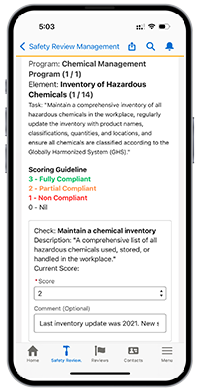
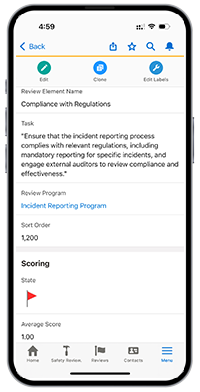
1. Answer The Questions That Matter
- Plain-English questions aligned with the WHS Act and ISO 45001.
- Answered by the people who manage your office, teams and client work.
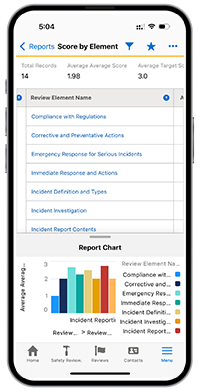
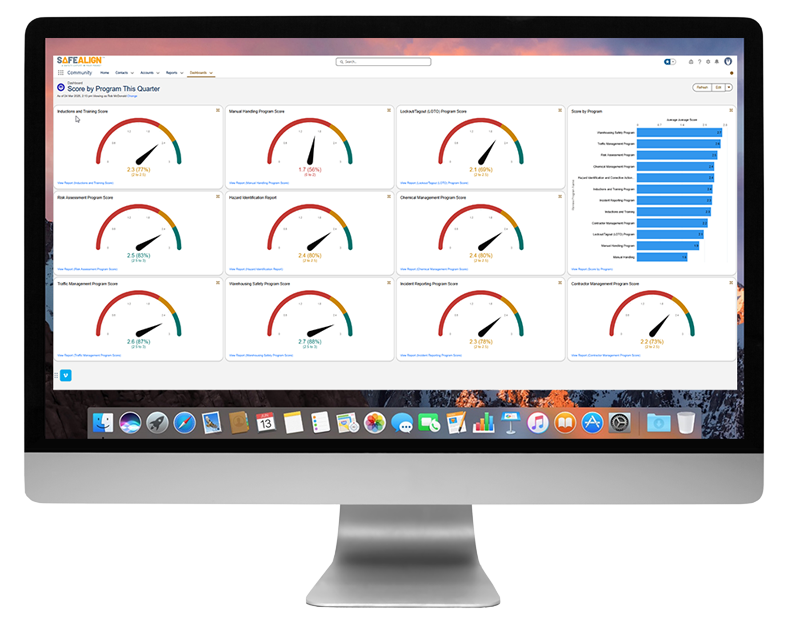
2. Get A Score The Partners Can Read
- Traffic-light reports across 10 elements.
- A dashboard view that drops straight into partner meetings and board papers.
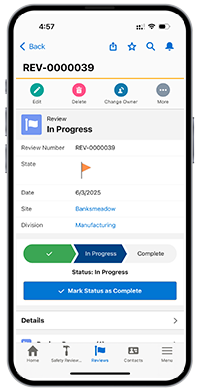
3. Work Through The Gaps
- Red items first, with actionable safety insights showing what to fix and each fix recorded as it's done.
- Make the review a standing item at management meetings.
4. Stay Current As The Firm Changes
- Reassess when you open an office, change working arrangements or grow headcount.
Your firm's safety position, clear enough for the next partners' meeting.

"We're an Office. WHS Isn't Really Our Thing."
It’s a common view, and on physical risk it’s partly right. You don’t run forklifts or scaffolding, and your injury risk is lower than a building site’s.
But the WHS Act doesn’t switch off in an office. Firms still carry duties for emergency plans, first aid, safe workstations and consultation, and most jurisdictions now spell out a duty to manage psychosocial hazards such as excessive workload, bullying and harassment. A policy on the intranet shows compliance on paper, but compliance is not the same as control. SafeAlign shows where your safety system stands against the Act, with a score instead of an assumption.
And will people take it seriously? In a firm that bills in six-minute units, anything that eats hours gets ignored. SafeAlign asks for very little, with guided questions on a phone, no training session and a system we build for you.
Ten Elements, One Score
For a firm without a safety team, the hardest part is knowing what “enough” looks like. Regulator guidance runs to hundreds of pages, and little of it speaks directly to a 30-person practice.
SafeAlign draws the boundary. Your safety system is assessed across 10 elements, each scored green, amber or red. Green holds up, amber needs attention, and red comes first. It’s a better way to look at WHS gaps than rereading a policy manual.
The questions behind SafeAlign come from 25 years of assessing Australian workplaces, so they’re the ones an experienced assessor would ask your firm, in words your office manager won’t need translated.
What the WHS Act Expects From a Professional Services Firm
The duties don’t disappear because the work happens at a desk. These are the areas where office-based firms most often have gaps:
-
Psychosocial hazards.
WHS regulations in most states and territories now require you to identify and control psychosocial hazards, including excessive workload, poor support, bullying and harassment. For deadline-driven client work, this is a live issue. -
Working from home.
Your duties extend to wherever your people work, including a spare room. You need a reasonable way to check home setups and stay in contact. -
Staff on client sites.
Engineers, auditors and consultants often work at client premises, sometimes on factory floors, in warehouses or on building sites. You and the client both hold duties, and the WHS Act expects you to consult, cooperate and coordinate. -
Workstations and ergonomics.
Long hours at a desk bring musculoskeletal risk. Setups, breaks and early reporting all count. -
Emergency plans and first aid.
Every workplace needs an emergency plan and adequate first aid, and people need to know what to do. A fire warden roster from two office moves ago doesn't count.
SafeAlign doesn’t replace your HR policies or your employee assistance program. It shows where your system meets these obligations and where it falls short: scored, prioritised and recorded as evidence that the firm looked.
FAQs
Does SafeAlign cover the WHS laws in my state?
SafeAlign measures your firm against the model WHS Act, which most Australian states and territories have adopted, and against ISO 45001. Firms with offices in more than one state are assessed against the same framework in each.
Is SafeAlign overkill for a low-risk office?
No. SafeAlign is built for businesses without a full-time safety team: 10 elements, one score, and setup done for you. There are no modules to configure; you answer the questions and see where you stand.
Who in our firm should run SafeAlign?
Usually whoever looks after operations, HR or the office, with input from team leaders. They don’t need a safety background to start, because the questions guide them and our team sets the system up and supports you after go-live.
Does SafeAlign help directors with due diligence?
If your firm is a company, its directors and other officers carry a personal due diligence duty under the WHS Act, and it can’t be handed to the practice manager. SafeAlign records each assessment, review and fix as it happens, building a timestamped record that the firm took active steps on safety.
Find out where your firm stands
One form from you; the build is ours. Book a demo to see how SafeAlign scores a firm like yours, with the team behind it, backed by 25+ years of Australian WHS consulting.
How to Get Started
Set Up Without Losing Billable Hours

1. Submit Your Details
A short online form about your firm.
2. We’ll Be in Touch
We'll ask how your offices, teams and client work are set up.
3. System Setup
We do the setup, so nobody's timesheet takes the hit.
4. Go Live with Ongoing Support
Your system goes live, and we're on hand from there.